‏نمایش پست‌ها با برچسب Maryam Rajavi. نمایش همه پست‌ها

۱۳۹۶ مرداد ۲۵, چهارشنبه

Opinion: Couple US sanctions with Middle East expulsion of Iran


White House and more Americans urge new sanctions on Iran

By: Shahriar Kia

Riyadh Daily, 16 August 2017 - The Iranian regime is attempting to secure a corridor through Iraq, Syria, and Lebanon, providing a supply route for its numerous terrorist proxies in the region.
Iran’s clandestine nuclear and ballistic missile drive, support for terrorism and domestic crackdown are all aimed at maintaining the Tehran’s fascist mullahs in power and pursue their regional policies.
This notorious objective, in direct conflict with those of the regional and global coalitions to fight terrorism and extremism, can be stopped. Eviction of Iran’s Revolutionary Guard Corps (IRGC) and all its proxy forces from the Middle East must complete the new US Congress sanctions. With President Donald Trump signaling his approval, this first and foremost step should be taken with hesitation following the sanctions.


The US House of Representatives voted overwhelmingly to rally major new sanctions on Iran, parallel to measures on North Korea and Russia. To impose additional sanctions on Iran’s defense sector, the House voted 419-3. Coming after three weeks of negotiations, this bill “tightens the screws on our most dangerous adversaries,” explained House Speaker Paul Ryan.

                                                    Maryam Rajavi

Maryam Rajavi , the President-elect of the National Council of Resistance of Iran ( NCRI ), welcomed the adoption of a bill by both chambers of the US Congress which imposes new sanctions on the Iranian regime for violating human rights and pursuing ballistic missiles.
“Since several years ago, the Iranian Resistance had urged the terrorist designation of the IRGC, as it preserves the entirety of the clerical regime and acts as its main apparatus for domestic suppression and export of terrorism and fundamentalism,” she stressed. “However, the policy of appeasing the mullahs’ religious dictatorship paved the way for the IRGC and its proxies’ rampage in the entire region.”


A look back at the pivotal role Iran played in the rise and flourishing of ISIS, parallel to sectarian conflicts in the region, will help find the right tracks for security in the region.
In 2008, a joint campaign led by the U.S. military and Iraqi Sunnis rooted al-Qaeda in Iraq, the precursor to ISIS. However, the Obama administration’s decision to pull back and deliver the country to former prime minister Nouri al-Maliki, a close ally of the Iranian regime, eventually led to the unraveling of all previous achievements.
Maliki dismantled the Iraqi “Awakening Council” and gave Iran free pass to exert its full influence on Iraq’s political and military apparatus.
In tandem, the destruction and crimes committed by the IRGC and Bashar al-Assad regime against the Syrian people provided the perfect breeding ground for sectarian strife and allowed ISIS to occupy a wide swath of land straddling both countries.
The Iranian regime became the main beneficiary of the rampage caused by ISIS and subsequently used it as an excuse to expand its clout by forming and later legalizing the IRGC-equivalent Popular Mobilization Forces (PMF). This entity has become notoriously renowned for its crimes against humanity, no less horrendous than those committed by ISIS.
Iran’s highest officials have time and again acknowledged funding and supporting the criminal militia forces in Iraq and Syria, expressing their vested interest in occupying neighboring countries through whatever means.
The Obama administration’s hands-off approach vis-à-vis Iran’s regional ambitions provided Tehran a far better opportunity to pursue its nefarious agendas under the pretext of fighting ISIS. Speculations raised U.S. officials on possible cooperation with Iran in the fight against terrorism only made matters worse.
Now, as ISIS is losing influence and ground, Iran is attempting to fill the gap. Letting it have its way would be a recipe for disaster, as proven in the past eight years.
Despite the threats and taunts broadcasted regularly Iran’s state media, the regime is far from capable or inclined to enter open warfare with any other state in the region or across the globe.
Tehran’s proxies are only as good as the funding and supplies the regime provides. Without IRGC support Iran’s proxies will be hard-pressed to spread their mayhem in the region.
Sanctions alone, however, will not be enough. Tehran has found ways to continue causing mischief under the toughest sanctions regime.


The threats rendered by Tehran will only end with regime change in Iran. This will initially benefit the people of Iran, being the first victims of this regime’s criminal ideology, and categorically reject its destructive foreign policy, both inside the country and abroad.
One of the greatest manifestations of the Iranian people’s desire for change was expressed at the July 1st Free Iran gathering in paris. Tens of thousands of Iranian expats as well as politicians, activists and religious figures from across the world attended the rally to express their solidarity and support for the cause of freedom and democracy in Ira.The event had a clear message: regime change in Iran is the only viable solution for both the people of Iran and the region’s nations. There’s no need for another foreign conflict. 


The people of Iran and their organized resistance have the will, power and means necessary to realize this change.
Saudi Prince 'Turki Al Faisal' also addressed the massive gathering.“So, you have coming together now a mighty coalition of forces, joining with the Resistance, and that should give us hope that we can make that [regime] change,” he stressed.
=======
Shahriar Kia is an Iranian dissident and a political analyst on Iran and the Middle East. He is a member of the Iranian opposition and a graduate of North Texas University.

۱۳۹۶ مرداد ۱۶, دوشنبه

Trump sanctions set stage for necessary regime change in Iran


With the president’s signature on H.R. 3364, formally known as the Countering America's Adversaries Through Sanctions Act of 2017, the Trump administration — eager for legislative accomplishments in the wake of the GOP failure to repeal the Affordable Care Act — can take credit for turning the page on failed Obama-era policy toward the Islamic Republic of Iran. 
The bipartisan passage of the long-anticipated sanctions bill by both houses of Congress allows the administration to take aim at rogue regimes in Iran, Russia and North Korea. Disagreements over U.S. policy toward Russia notwithstanding, the White House can be confident that legislators overwhelmingly support confronting threats emanating from Iran and North Korea and are prepared for even stronger measures to curtail the influence of these dangerous regimes.
The White House should now build on the successful passage of sanctions legislation to push for regime change in Tehran as an appropriate next step.
ADVERTISEMENT
Trump administration surrogates can remind the American people that the White House first put Tehran on notice for engaging in regional destabilization shortly after Trump took office, pursued comprehensive sanctions targeting Iranian ballistic missile programs and directed the State Department to designate the Iranian Revolutionary Guard Corps (IRGC) as a foreign terrorist organization, thereby blacklisting it from the global economy.

The latest sanctions legislation effectively accomplishes this latter goal by extending all terror-related sanctions to the entirety of the IRGC as a Specially Designated Global Terrorist group. The question now is how far the Trump administration is willing to go to address the Iranian threat.
This question arose in June when the sanctions bill encountered delays, and it arose again in July when the White House, for a second time, certified Iranian compliance with the 2015 Joint Comprehensive Plan of Action (JCPOA). The move surprised many seasoned Iran experts familiar with Tehran’s belligerence, particularly given the president’s campaign pledges to scrap the porous agreement altogether.
In fairness to the White House, the day after certifying Iranian compliance with the Obama nuclear deal, the administration announced that it planned a thorough review of U.S. Iran policy. Some critics of the nuclear agreement believed that simply tearing it up on day one was not the best way to proceed.
But virtually all analysts agree that steps must now be taken to address the significant shortcomings of the JCPOA. The agreement’s weaknesses and omissions — the result of Obama-era eagerness to secure a deal at any cost — are well known on both sides of the aisle.
Trump’s embrace of the sanctions legislation may be an indication that he intends to adopt a more strategic policy toward Iran that would force concessions from the Islamic Republic or even encourage the transition to a new, democratic system of government. 
Secretary of State Rex Tillerson previewed this possibility in June and some Iran analysts have suggested that the Trump administration’s assertive posture toward Tehran points in this direction. But Trump, Tillerson and others must now pay attention to how they plan to facilitate regime change via “elements inside Iran” to ensure a permanent solution to the nuclear issue and other matters.
The July 1 gathering in Paris of tens of thousands of Iranian expatriates committed to democratic change, supported by senior members of the president’s own party, was sufficient to remove any doubts about the likelihood of regime change being successful. It was clear to all in attendance that there is a democratic alternative to the ayatollahs and regime change is within reach.
At the Free Iran rally, Maryam Rajavi, president of the National Council of Resistance of Iran (NCRI), characterized the then-pending blacklisting of the IRGC as necessary to facilitate a domestic uprising against a weakened Iranian regime. Recent protests suggest that ordinary Iranians have tired of the regime’s civil and political repression, human rights abuses and adversarial relationship with global powers, leaving them vulnerable to a "Persian Spring."
But Rajavi emphasized that it will take more than a single package of sanctions to ensure success for the resistance movement. Now that obstacles to the IRGC’s terrorist designation have been overcome, it is time to discuss how the U.S. and its allies can further undermine Iran’s hardline paramilitary and curtail its foreign influence. 
With provocative ballistic missile tests and harassment of American naval vessels in the Persian Gulf becoming a near routine occurrence, the Trump administration hardly needs a reminder of the importance of confronting the IRGC. Now the White House must decide whether it is prepared to bring an end to the regime that created the hardline paramilitary organization. 
By taking assertive actions and supporting the Iranian opposition, Trump can signal not only his displeasure with JCPOA but also write the next chapter in U.S. policy toward Iran by building on the successful passage of congressional sanctions legislation.
Tehran’s rogue status and lack of legitimacy presents the White House with a unique opportunity to further isolate the Iranian regime and deny it the resources to suppress its own people the next time they rise up and demand change. The question is whether the administration is willing to seize the opportunity and push for regime change in Tehran.
Ivan Sascha Sheehan, Ph.D., is director of the graduate programs in Global Affairs & Human Security and Negotiations & Conflict Management in the School of Public and International Affairs at the University of Baltimore. Follow him on Twitter @ProfSheehan.


۱۳۹۶ تیر ۳۰, جمعه

YEARS INTO NUCLEAR DEAL, US POLICY ON IRAN NEEDS MAJOR MAKEOVER


byAli safavi __July marks the second anniversary of the nuclear agreement between the Iranian regime and the five permanent members of the U.N. Security Council plus Germany. Former U.S. President Barack Obama envisioned the agreement — known as the Joint Comprehensive Plan of Action (JCPOA)— as a potential starting point for a broader rapprochement between the ruling theocracy and the West.


Obama had insisted that with Hassan Rouhani as the regime’s “moderate” president, Tehran would begin to exhibit a more positive behavior. Now, in his second term in office, the promise of moderation under Rouhani’s leadership has proven empty. That is because Rouhani neither wants nor is capable of reform. After all, it is not the president but the supreme leader who defines the contours of the regime’s short-term and long-term strategic direction.

                                                           James Mattis 

That the possibility of moderation in the Iranian theocracy is a total delusion was reflected in Secretary of Defense James Mattis's recent interview with Washington state’s Mercer Island High School newspaper.
Secretary Mattis dismissed the May 19 Iranian presidential election as “not really an election” and highlighted the stark differences between the ideology of the Iranian regime and the character of the Iranian people.
Still more significant, Mattis endorsed the message that had been presented to the House Foreign Affairs Committee last month by Secretary of State Rex Tillerson. At a hearing, Tillerson suggested that American foreign policy should be focused first upon confronting the regime over its regional destabilization and then ultimately upon facilitating transition to a democratic system of government, driven by existing voices of opposition. The Defense secretary, too, reiterated that the Iranian regime is the most destabilizing force in the entire region. 
After 38 years of the clerical rule in Iran, the world is beginning to understand that stability in the Middle East requires the removal of the Iranian regime, known for being the world’s foremost state sponsor of terrorism and the only full-fledged theocracy in the modern world.

While the U.S. administration has imposed new sanctions on individuals and organizations with ties to the Iranian ballistic missile program, it is now mulling the designation of the Islamic Revolutionary Guard Corps (IRGC) as a foreign terrorist organization.  

By highlighting elections in Iran as a sham and also the fundamental divide between the regime and the Iranian people, Secretary Mattis did undercut much of the previous administration’s rationale for futile rapprochement with the Iranian regime.
Since the regime is both unwilling and incapable of reforming itself, democratic change at the hands of the Iranian people and their organized opposition should be recognized as the only viable option to deal with Tehran’s multi-faceted nefarious conduct. Until this situation changes, nothing else about Iran will change, not even its commitment to developing a nuclear weapon as part of its bid for regional hegemony and global influence.

                                                         Maryam Rajavi 

This is the message that was delivered to a cheering crowd of tens of thousands of Iranians at the “Free Iran” rally in Paris on July 1 by the Iranian opposition leader Maryam Rajavi and by other international supporters of the National Council of Resistance of Iran (NCRI). Rajavi used the opportunity to urge the U.S. and its allies to formally recognize the right of the Iranian people and their organized opposition to oust the dictatorship. A democratic Iran, she added, is an imperative and is within reach. An alternative that can affect change exists.


The Free Iran rally went a long way toward showcasing the depth of Iranian people’s animosity toward the regime. Media outlets reported that the event was attended by some 100,000 people, mostly Iranian expatriates, and it featured messages from domestic dissidents and accounts of the more than 10,000 known acts of protest against the regime over the past year.
It also highlighted a flurry of activities by supporters of the NCRI and its key component, the Mujahedin-e Khalq (MEK), inside Iran who are campaigning for democracy.
Two years after the nuclear deal, it is time for a serious and comprehensive Iran policy makeover based on realities on the ground. This means designating the IRGC as a terrorist entity, expelling the Iranian regime and its proxies from the region, taking effective initiatives to permanently block the Iranian regime’s path to a nuclear bomb, and recognizing the Iranian people’s right to topple the regime and establish a democratic and peace-seeking representative government that would be the source of stability and peace in the region. 


۱۳۹۶ تیر ۲۵, یکشنبه

A democratic alternative to the Iranian regime – 'Free Iran' rally highlights MEK's role in Iranian resistance


                                                                   rally highlights     

During the 'Free Iran' rally in Paris on July 1, the mood was festive and clearing upbeat, as speakers discussed the movement of MEK members from Iraq to Albania.


But many of the speakers and delegations also spoke of the real possibility of regime change in Iran, as they noted major changes on the international scene. Speaker after speaker from the United States pointed to the new policies of the Trump administration, while others acknowledged the Obama administration for its efforts to remove the MEK from the terrorist list.

                                                                               Maryam Rajavi

Still, the highlight of the event was the keynote address by Maryam Rajavi, the National Council of Resistance of Iran (NCRI) President-elect. She noted that there was an alternative to the current regime and its extremism.
"Since last July, the Iranian Resistance has hoisted the banner of seeking justice for the victims of the massacre of political prisoners 29 years ago, turning it into the main focus of political discourse in Iran today," said Rajavi.
She noted that in the recent Iranian elections, which many speakers called a "sham", that the slogan of the resistance was "No to the executioner, no to the charlatan". It was a slogan that was widely embraced by the Iranian people, and referenced the attempt by Khamenei to elect Raisi, a member of the death commission in the 1988 massacre.


Rajavi said there is alternative to the Iranian regime and it is the Iranian resistance.
"It is relying on political prisoners, who reaffirmed their support recently for this gathering from the depth of their cells and dungeons. It is relying on women, workers, teachers, professionals, and selfless youths. It is relying on their unsparing love and generous support, those who barrow money and sell their houses and properties to help keep this Resistance independent, strong, and solidified," said Rajavi.

She noted that the Resistance has continued to fight for freedom and stood by what it has said and promised.
"The Iranian nation is proud to have created a democratic alternative through resistance and great suffering and sacrifice. This decisive asset,…did not exist at the time of the Shah," said Rajavi. She acknowledged that this left a vacuum that allowed the regime to grow and take root.
                                                                             Massoud Rajavi, 
As part of her discussion of the Resistance, she acknowledged the contributions of Massoud Rajavi, who has been a leader in the Resistance, but also active in encouraging those in Camp Liberty to keep fighting and maintain the struggle for freedom.

۱۳۹۶ تیر ۹, جمعه

PRESIDENT MACRON: IRAN IS NO PARTNER TO FRANCE


PRESIDENT MACRON: IRAN IS NO PARTNER TO FRANCE


PRESIDENT MACRON: IRAN IS NO PARTNER TO FRANCE

NEWS : Maryam Rajavi

INU - On June 17, 14 years ago, the French anti-terror police raided offices of the Iranian main opposition, the National Council of Resistance of Iran (NCRI) and its principle member, the Mujahedin-e Khalq or MEK, near Paris. Hundreds were arrested and building were torn down.

The expressed explanation for the drastic measure was “terrorism”. It turned out, they found nothing but a group of unarmed exiles and political refugees whom their only crime was trying to expose a tyrannical theocratic regime that ruled their country for decades.
It was further revealed that the then government of France had entered a shameful deal with the terrorist regime ruling Iran to raid the offices of its democratic opposition in return for more trade contracts.

The MEK was ultimately cleared of all charges, with the investigating judge reaching the conclusion that MEK has been engaged in a legitimate struggle against repression.
The MEK was vindicated but left an eternal shame for those who were engaged in sacrificing France’s reputation as the cradle for human rights for a few commercial deals with a terrorist regime.
Nowadays, the Iranian mullahs’ regime is being recognized as the source and main supporter of terrorism around the world and specifically in the Middle East.


The MEK Struggle
For over three decades the MEK and its supporters have been struggling to bring freedom and democracy to Iran.
The MEK members have been the pioneers in the struggle to realize the desire of the Iranian people to end the mullahs’ dictatorship in their country and replace it with a democratic government.
World governments increasingly come to realize the result of what is now known as the “rapprochement policy” towards the Iranian mullahs.
The carnage in Syria and crimes against humanity committed by Bashar Assad and the Iranian regime is one example of the outcome of the policy of appeasement.
Today, the MEK is increasingly gaining ground as a legitimate and strong solution and alternative to the Iranian rulers.
The MEK message is that the world no longer has to put up with a government that supports terrorism and threatens other nations by building nuclear weapons and long-range ballistic missiles.
Today, the MEK constitutes a strong force in the Iranian people’s struggle for democracy and freedom. That is so while over 100,000 members and sympathizers of the MEK have been executed by the clerical regime during the past four decades.
                                                                  MaryamRajavi

The MEK has called on world governments to stand with the Iranian people’s desire to end mullahs’ regime and bring peace and stability to the region.
The MEK’s network in Iran has in recent months extensively increased its activities inside Iran. A major movement for seeking justice for victims of mass executions by the Iranian regime has formed in Iran. In particular the movement is seeking justice for victims of 1988 massacre of political prisoners, most of whom were members and supporters of the MEK.
The strength of the movement in support of the MEK has sent shockwaves through the Iranian regime. Almost every day state run media are writing about the MEK in a futile attempt to demonize the MEK.
The mullahs are using the same method, disinformation, by their lobbyist or agents of the Ministry of Intelligence and Security (MOIS) to demonize the MEK in order to confront growing recognition of the MEK as a leading democratic force for change in Iran.
MEK And Europe


A large number of members of the MEK, were moved to Europe last year, mostly to Albania under the direct supervision of the United Nations.
According to Albanian media since the relocation to Albania, many American and European dignitaries and representatives have paid visits to the group, expressing their support for the MEK and its cause.
To name a few, US senator John McCain, Ambassador John Bolton, Gilbert Mitterrand, a French parliamentary delegation, as well as Members of European Parliament visited the MEK members at their new home in Tirana just recently in 2017.
Every year around this time, the Iranian diaspora supporting the democratic coalition of National Council of Resistance of Iran (NCRI), in which the MEK is a member organization, holds a large gathering in Paris, France as the annual gathering of Iranians seeking freedom and democracy in their homeland.
The Beginning Of Resistance

The month of June also marks the beginning of the massive, all out, crackdown on the Iranian opposition some thirty six years ago.
On June 21, 1981 the regime then Supreme leader called on the notorious Revolutionary Guards to open fire on the peaceful demonstration organized by the MEK.
A massive crackdown and execution rampage that was staged by the mullahs soon after, forced many Iranians including the MEK and its supporters into exile. That was the start of the resistance movement which is today recognized as the main opposition to the Iranian regime.
Paris Rally: The Call For Regime Change In Iran


In recent years, the Rally held in Paris, brings in tens of thousands of supporters to France calling for regime change in Iran and the establishment of a non-religious and elected government in that country.
Many world-recognized dignitaries and high officials have attended the gathering in the past as they will do so this year to extend support and solidarity with the Iranian voices for freedom.
The key-note speaker of the event last year was, Mrs. Maryam Rajavi, the president-elect of the National Council of Resistance, who has led the movement during the hard years of exile.
The Rapprochement Policy
The rapprochement policy may have secured some commercial contracts for EU countries, yet it has brought nothing but more terrorism and agony for the EU citizens.
The policy has brought more executions and oppression for the Iranian people and the MEK specifically.
And the policy has resulted in no true resolution to the rogue actions of the mullahs. On the contrary, the rapprochement policy has emboldened the mullahs in taking the world hostage for political ransom.
The Iranian mullahs openly support acts of terrorism throughout the world by supporting groups such as Hezbollah. Their Revolutionary Guards corps is actively involved in Syria, Iraq, Yemen, and other parts of the region. The Iranian officials have openly confirmed involvement in fatal attacks on US and Western personnel in Iraq.
Just recently, 265 members of the European parliament singed a statement calling for the blacklisting of the Iranian Revolutionary Guards (IRGC) as a terrorist organization.

The statement also calls for a commission for inquiry into massacre of political prisoners in Iran. The Iranian regime went on a rampage killing over 30,000 political prisoner following the eight-year war with Iraq in the summer of 1988.
The majority of those fallen victim to the executions where members and supporters of the MEK.

MEK – Blowing The Cap Off Mullahs’ Nuclear Program

Many world parliamentarians and high-officials have recognized and commended the MEK as the original revealers of the Iranian regime’s nuclear development program - revelations that have come with great sacrifice from the part of MEK supporters inside the country.
We may never know but the MEK may have in fact saved the world from complete destruction by preventing a state-sponsor of terrorism from becoming armed with nuclear weapons.
And The Paris Rally
As the yearly rally by the Iranian opposition nears – planned for 1 July, 2017 – France will once again be at center stage of a peaceful but very significant gathering of not only Iranians but world dignitaries who care deeply about peace and security in the Middle East and the world over.
This is a gathering against extremism and advocating tolerance.
In this respect, MEK is the political force, which rejects extremism under the name of religion, advocates gender equality and separation of religion and state and in short advocates a democratic and tolerant Islam.

European leaders including President Macron who has just formed its government after a landslide victory in the Parliamentary election are expected to stand firm vis-à-vis the extremism whether it is originated by ISIS or the mullahs’ regime who are called by Iranian people as the Godfather of the ISIS.

The world is watching European leaders at this critical juncture to stand with their principles and not some petty economic interests. History will judge them.

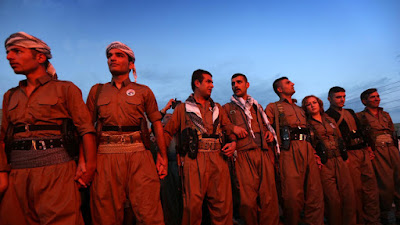
ANALYSIS: Revealing the brutal repression of Kurds in Iran

F. Mahmoudi, Special to Al Arabiya English Saturday, 9 September 2017 Acts of brutality against the Kurdish population in Iran is a ...