‏نمایش پست‌ها با برچسب mek. نمایش همه پست‌ها

۱۳۹۶ مرداد ۵, پنجشنبه

How blood of innocents has become an endless nightmare for Iranian regime


People chant slogans and hold pre-revolutionary Iranian flags in Paris, on August 17, 2013, as they take part in a rally marking the 25th anniversary of the 1988 massacre of Iranian political prisoners. (AFP)

By F. Mahmoudi
Special to Al Arabiya EnglishThursday, 27 July 2017


In Iran, 1980s is known as a bloody decade as thousands of political opponents were executed in brutal mass murder.In the summer of 1988, a massive slaughter took place in Iran’s prisons. Ayatollah Hossein Ali Montazeri, the successor of Khomeini, was dismissed as a result of his objection to this massacre.

                                                                             Montazeri 


In September 2016, an audio tape from a meeting of the late Ayatollah Montazeri with members of the committee of executioners (commonly known by Iranians as death committee) was published by his son, which led to his arrest and prosecution.
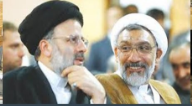
In the audio tape, Ayatollah Montazeri described this massacre as the worst crime in the history of the Islamic Republic, and named Ibrahim Raisi, Mostafa Pour Mohammadi, Hossein Ali Nayeri and other coordinators as criminals.

Judgment against Islam


In a recent TV interview, Ali Fallahian, the minister of intelligence during the Rafsanjani government, said: “The view of Mr. Montazeri, who disagreed with Imam (Khomeini), was that these executions will ultimately cause a “historical judgment” against us, a judgement against Islam, so it is to our benefit not to conduct these executions, but Imam said that you must perform your religious duty and don’t wait for the judgment of history.”
The families of victims of 1988 massacre are currently seeking justice for their loved ones who were secretly executed and buried in mass graves at nights without any due process. The call for justice led by Iranian opposition, which started last year, caused a challenge for both of the regime’s factions during the presidential elections.
The created chaos between regime’s factions forced Khamenei to comment in a recent speech that “no one should be allowed to change the place of martyr and henchman in relation to the executions of the 1980s.”
What he meant was that the heads of this government are executioners in the eyes of the Iranian people, and this will create internal and international consequences that must be avoided.

Nimrooz movie

Additionally, state-controlled media released Khamenei’s praises about the “Nimrooz” movie, a production funded by the Iran revolutionary guard corps (IRGC) aimed at demonizing the People’s Mojahedin Organization of Iran (PMOI/MEK), a prominent opposition movement. The reason of making this film was to prevent another uprising similar to 2009, in which the MEK played a pivotal role in organizing protests against the regime.


After the release of the film, former political prisoners and families of executed prisoners condemned the events showed during this film and called it as a distortion of the reality in history.
In another hasty event, the Iranian regime put up a show, a tour of Evin Prison, to international delegations. The purpose of holding this tour for 50 ambassadors of different countries on July 5 was to destroy and wash the traces of the regime’s crimes. Amnesty International called this tour a “crude PR Stunt” and mentioned in a statement that Evin prison is known in the world as a symbol of wide political oppression in Iran.
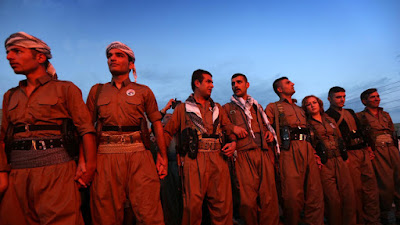
The executed prisoners of the 1980s were members and supporters of opposition groups of the Iranian regime, such as the MEK, Marxists and Kurds. MEK members and supporters accounted for more than 90 percent of the victims. Beleaguered in Iraq in the post 2003 era, the MEK experienced a very difficult and dangerous situation, particularly over the last decade.
Under such circumstances this movement has been able to attract public sympathy through mass media, especially satellite and Internet. Currently, the Iranians and the International communities have become curious to acquire knowledge about this movement.

Inhuman seige

In face of an inhumane siege and the looming danger of further massacres, members of MEK put up a heroic persistence and defended themselves with bare hands and survived the many plots of their enemies. Eventually, the MEK members exited Iraq and resettled in Albania. Now, the MEK is finding a fast-growing following in Iran, especially among the youth, creating a serious challenge for the Iranian regime.

With the rise of the call for justice for 1988 massacre, the Iranian regime is trying to destroy the evidence of this brutal murder and discourage the youth from joining the opposition movement. It has produced a propaganda film to change the place of martyr and executioner, and destroyed the mass graves of executed prisoners.
The Iranian youth, even the children of regime officials, want to know the reality and the truth of what happened in the 1980s, and the history of the movement that recently held a huge gathering in Paris. Also, they want to know what message it conveys for them.
Meanwhile, Khamenei has ordered to produce another film for Assadollah Lajevardi, the former head of Evin prison known as “Evin hangman,” who was one of the criminals 1988 massacre. “Hopefully, you can do something for Lajevardi as well. He is one of the figures who deserves something. His name was mentioned in this film, but he is one of the persons that we called him ‘strong man’ before,” Khamenei said.
It seems the spilled blood of the innocents who were ruthlessly murdered in Iran is now undermining the foundations and the very existence of the Iranian regime. Sympathy for the victims and their family has now penetrated the depths of the Iranian society and has become an endless nightmare for regime.
As Rahimpour Azghadi, a Khamenei confidant has said, “the events of the ‘80s and 88 will uproot the regime, even if we have the largest missile in store.”
Last Update: Thursday, 27 July 2017 KSA 14:49 - GMT 11:49

۱۳۹۶ مرداد ۱, یکشنبه

ANALYSIS: Unveiling the secrets of Iran’s 1988 massacre


By Heshmat AlaviSpecial to Al Arabiya EnglishSaturday, 22 July 2017


Ali Fallahian, Iran’s intelligence minister during the tenure of Rafsanjani’s presidency back in the early 90s, is a name most notoriously known for his role in a series of chain murders across the country that saw the elimination of many dissidents.
Fallahian has recently been heard making shocking revelations in reference to mass executions, especially targeting members and supporter of the Iranian opposition People’s Mojahedin Organization of Iran (PMOI/MEK).
A German court raised charges against Fallahian for his direct involvement in the September 1992 assassination of Iranian Kurdish dissidents in Berlin. In 2007, Interpol placed Fallahian on its most wanted list for his role in the 1994 bombing the AMIA in Buenos Aires Jewish center that left 85 killed.
The 1988 massacre of over 30,000 political prisoners, mostly MEK members and supporters, has in the past year inside Iran become a major issue for the general public, especially the younger generation who are beginning to demand answers.
Fallhian’s remarks, aired in a recent interview, have caused quite a stir in social media inside Iran and amongst Iranian communities living abroad. In this interview, Fallahian sheds light on his role in the Iranian regime’s die-hard enmity against the MEK as the only opposition truly threatening their rule.
Q: “Can we blame only the MEK for taking up arms, or did we also make mistakes… for example, attack their gatherings, pressure their members and supporters...?”
Fallahian: “They had such an analysis. [Iranian opposition leader Massoud] Rajavi had maybe written 36 articles against armed conflicts.” (Khazar website – July 18) This is Fallahian acknowledging the fact that the MEK had sought to continue their peaceful political activities. The mullahs’ regime, however, dispatched their forces to attack, arrest, torture and kill MEK members. Fallahian moves on to discuss the 1988 mass executions across Iran.
Q: “Did the Intelligence Ministry suggest the 1988 executions to [Iranian regime founder Ruhollah] Khomeini?”
Fallahian: “Khomeini himself ordered it… saying the ruling for all moharebs [term used for MEK members, meaning enemies of God] is execution. There were discussions in this regard back then. Mr. Mousavi Tabrizi believed there was no need for prosecution, arguing prosecuting those who are at war with us has no meaning. Others believed those arrested should be prosecuted… however, [Khomeini] constantly emphasized to beware they don’t slip out of your hands… [Khomeini] would always say be careful in this regard… how? For example, if there was a confusion about someone being a murderer or not, execution would not be the first option of punishment. However, about the MEK [Khomeini] would say an opposite approach is needed. I know them, he would say, they must not slip away and their rulings are execution. This was his constant ruling, before and after the 1988 issue…
“… there are discussions and some are asking why were those sentenced to prison terms again condemned to death? First of all, keep in mind their rulings are execution, even if a judge hadn’t ruled for an execution, he had violated the law… If an armed mohareb was arrested, his/her ruling would be execution, even if he/she hadn’t killed anyone… the ruling for a hypocrite (another term used for MEK members) and mohareb is execution. This was [Khomeini’s] fatwa. There was no discussion in this regard. In 1988… the discussion reached the point that all of them must be executed, even those not sentenced to death. [Khomeini] would ask why have you still kept them alive.”
It is worth noting that the Iranian opposition has for the past year launched a justice movement shedding light on the 1988 massacre both inside Iran and across the globe. These efforts went into full gear weeks prior to Iran’s May 19th presidential election, forcing Supreme Leader Ali Khamenei to sack his plans of engineering election results as he desired.
Conservative cleric Ebrahim Raisi, known to be Khamenei’s preferred candidate to replace the incumbent Hassan Rouhani as president, suffered a major defeat due to revelations of his role in the 1988 massacre. Raisi was a member of the notorious four-man “Death Commission” appointed by Khomeini himself to facilitate and hasten the execution process.
Q: “Raisi was in the commission. Who were the other members?”
Fallahian, however, refrains from naming other Death Commission members and begins discussing the process which political prisoners were executed and the summer 1988 massacre. He placed all the blame on Khomeini, emphasizing he had issued the execution and massacre ruling long before.”
Fallhian: “Yes, the poor guy [referring to Raisi] insisted he hadn’t issued the ruling, the ruling was issued in advance… but no one would listen, and they would also think the executed were innocent… if we hadn’t killed them there would be no country today. These are not my words, they are the words of [Khomeini]…”
The reporter seeks to make a reference to a groundbreaking sound file unveiled last September of Khomeini’s then successor, the late Hossein Ali Montazeri, in which he sheds light on unknown aspects of the 1988 massacre.

Q: “What was Mr. Montazeri’s mistake?”
Fallahian: “He came in disagreement with [Khomeini]… [He] believed history would judge these executions against us and Islam. He would say it would be better to refrain, as when the enemy begins to write, they won’t cite us harshly. However, [Khomeini] ordered to carry out your religious duty and don’t wait for history’s judgement.”
Q: “Were all those executed arrested while armed?”
Fallahian: “No, not all of them were involved in the armed revolt. However, many of them were living in team houses. We would go there and find only one or two weapons, or arrest them on the street without any arms.”
Q: “So how were they linked to the armed revolt?”
Fallahian: “Well, they were part of the organization.”
Q: “Wasn’t it necessary for each individual to have taken up arms to be convicted of being a mohareb?”
Fallahian: “No, when someone is a member of an armed current, the individual being armed or not, their ruling is mohareb.”
Q: “Even if they are arrested with a newspaper?”
Here the interviewer is referring to the fact that many MEK members and supporters were arrested, and eventually executed, for the mere fact of having a pro-MEK newspaper at their possession.
Fallahian: “Yes. They were part of that organization and were operational. Now, its possible someone would merely buy bread for those living in ‘team houses’, another would, for example, procure other necessary items. They were all involved.”
On a side note, Fallahian referred to the extensive MOIS role in dispatching its spies abroad under various pretexts.
Revelations and shocking remarks about the 1988 massacre are made by numerous senior Iranian officials recently. What has made these figures acknowledge the nature of the mullahs’ regime of carrying out such massacres and mass murders?
This has been the true, yet unfortunately cloaked, nature of the mullahs ruling Iran. Nearly three decades after that horrific summer of 1988, the efforts placed by the Iranian opposition through its vast network of brave activists inside the country and abroad have forced the mullahs to literally confess to their role in these killings.
It is now high time for the international community to demand a fact-finding mission, and bring to justice all perpetrators of the 1988 massacre and all the atrocious human rights violations throughout the past 38 years.

۱۳۹۶ تیر ۳۰, جمعه

YEARS INTO NUCLEAR DEAL, US POLICY ON IRAN NEEDS MAJOR MAKEOVER


byAli safavi __July marks the second anniversary of the nuclear agreement between the Iranian regime and the five permanent members of the U.N. Security Council plus Germany. Former U.S. President Barack Obama envisioned the agreement — known as the Joint Comprehensive Plan of Action (JCPOA)— as a potential starting point for a broader rapprochement between the ruling theocracy and the West.


Obama had insisted that with Hassan Rouhani as the regime’s “moderate” president, Tehran would begin to exhibit a more positive behavior. Now, in his second term in office, the promise of moderation under Rouhani’s leadership has proven empty. That is because Rouhani neither wants nor is capable of reform. After all, it is not the president but the supreme leader who defines the contours of the regime’s short-term and long-term strategic direction.

                                                           James Mattis 

That the possibility of moderation in the Iranian theocracy is a total delusion was reflected in Secretary of Defense James Mattis's recent interview with Washington state’s Mercer Island High School newspaper.
Secretary Mattis dismissed the May 19 Iranian presidential election as “not really an election” and highlighted the stark differences between the ideology of the Iranian regime and the character of the Iranian people.
Still more significant, Mattis endorsed the message that had been presented to the House Foreign Affairs Committee last month by Secretary of State Rex Tillerson. At a hearing, Tillerson suggested that American foreign policy should be focused first upon confronting the regime over its regional destabilization and then ultimately upon facilitating transition to a democratic system of government, driven by existing voices of opposition. The Defense secretary, too, reiterated that the Iranian regime is the most destabilizing force in the entire region. 
After 38 years of the clerical rule in Iran, the world is beginning to understand that stability in the Middle East requires the removal of the Iranian regime, known for being the world’s foremost state sponsor of terrorism and the only full-fledged theocracy in the modern world.

While the U.S. administration has imposed new sanctions on individuals and organizations with ties to the Iranian ballistic missile program, it is now mulling the designation of the Islamic Revolutionary Guard Corps (IRGC) as a foreign terrorist organization.  

By highlighting elections in Iran as a sham and also the fundamental divide between the regime and the Iranian people, Secretary Mattis did undercut much of the previous administration’s rationale for futile rapprochement with the Iranian regime.
Since the regime is both unwilling and incapable of reforming itself, democratic change at the hands of the Iranian people and their organized opposition should be recognized as the only viable option to deal with Tehran’s multi-faceted nefarious conduct. Until this situation changes, nothing else about Iran will change, not even its commitment to developing a nuclear weapon as part of its bid for regional hegemony and global influence.

                                                         Maryam Rajavi 

This is the message that was delivered to a cheering crowd of tens of thousands of Iranians at the “Free Iran” rally in Paris on July 1 by the Iranian opposition leader Maryam Rajavi and by other international supporters of the National Council of Resistance of Iran (NCRI). Rajavi used the opportunity to urge the U.S. and its allies to formally recognize the right of the Iranian people and their organized opposition to oust the dictatorship. A democratic Iran, she added, is an imperative and is within reach. An alternative that can affect change exists.


The Free Iran rally went a long way toward showcasing the depth of Iranian people’s animosity toward the regime. Media outlets reported that the event was attended by some 100,000 people, mostly Iranian expatriates, and it featured messages from domestic dissidents and accounts of the more than 10,000 known acts of protest against the regime over the past year.
It also highlighted a flurry of activities by supporters of the NCRI and its key component, the Mujahedin-e Khalq (MEK), inside Iran who are campaigning for democracy.
Two years after the nuclear deal, it is time for a serious and comprehensive Iran policy makeover based on realities on the ground. This means designating the IRGC as a terrorist entity, expelling the Iranian regime and its proxies from the region, taking effective initiatives to permanently block the Iranian regime’s path to a nuclear bomb, and recognizing the Iranian people’s right to topple the regime and establish a democratic and peace-seeking representative government that would be the source of stability and peace in the region. 


۱۳۹۶ تیر ۲۶, دوشنبه

Why IRGC is enemy of Islam and a major source of terroris


In 1979, after decades of oppression, people in Iran courageously stood up to the Shah dictatorship and demonstrated power of the people by toppling him. But their hopes of freedom were soon crushed when Khomeini was able to deceive them with false promises to establish a bloody reign of terror, based on a state principle called velayat-e-faqih.
, 


We must not be deceived by media outlets, which try to compare Iran’s state principle to other countries in the region. Velayat-e-faqih means that the faqih, a so-called Islamic jurist, is the custodian of all Muslims until the missing 12th Imam Mahdi reappears. By nature, he must rule not only people in Iran but Muslims all over the world and has the divine duty to give global fatwas and intervene into other nations to “free” them.
This is manifested in the preamble of the Iranian constitution of 1979 when it says: “[T]he Army of the Islamic Republic of Iran and the Islamic Revolutionary Guards Corps (IRGC) […] will be responsible not only for guarding and preserving the frontiers of the country, but also for fulfilling the ideological mission of jihad in God’s way; that is, extending the sovereignty of God’s law throughout the world”.
We can see here that one main goal of IRGC is the export of “revolution” into other countries. There can never be peace as long as the whole world has been taken over by Iran’s fundamentalist interpretation of Islam. Therefore, we see that the IRGC is meddling in different countries in the region. No other country has a similar state form as Iran with the exception of ISIS.

By nature these two ideologies are similar with the difference that Iran claims to be “Shiite” while ISIS claiming to be “Sunni”. The Saudi Crown Prince therefore has every reason to say that dialogue with such a regime is impossible.
These interpretations counter the main principles of Islam which means submission and roots in the very Arabic word peace. When we take a look at the biography of Prophet Mohammad, he was always aiming to achieve peace treaties even if disadvantaging Muslims. It’s worth mentioning that Allah sent him an Ayah for victory (Quran 48:1) not after the winning of a fight but after making a peace treaty in Hudaibiyyah. These very principles are also found in the Quran which particularly aims to make people humble and loving.

Use of force

Similarly, also according to “Shiite” interpretations of Islam, Imam Ali called for the use of force only in situations of defense and only unless a necessity exists, forbidding even further violence when the enemy is injured and defenseless and from attacking innocent bystanders. This is manifested in important Shia sources such as Nahj al-Balagha.

Most “Shiite” scholars therefore reject Khomeini’s ideology and his state principle. We can therefore clearly see that the manifestation of the IRGC’s exportation of the ‘revolution’ through violence counters the very teachings of Islam. It is because of the exportation of terror through groups such as the IRGC, al-Qaeda and ISIS that many people have a wrong perception of Islam today.
These groups are therefore enemies of Islam. They misuse the banner of religion to teach anti-religious doctrines. According to the famous cleric Ayatollah Taleghani this is the most dangerous ideology possible, because here fundamentalism is justified through higher powers.


In recent years we have unfortunately seen numerous attempts to appease the Iranian regime. The Obama administration, for economic and geopolitical reasons, followed a policy of appeasement with Iran and gave them billions of dollars that were used for sectarian policies, terror and the export of its “revolution”. Even former US Secretary of State John Kerry acknowledged in an interview that Iran will use money from sanction relief for terrorism.
Qatar also helps Iran when it stroke deals and held meetings with notorious IRGC Commander Qassem Suleimani as recently in Baghdad and by spreading a pro-Iranian narrative on Al Jazeera. Therefore among other reasons Qatar is rightfully targeted by its Gulf neighbors for its involvement in global terrorism.

Economy and IRGC

Moreover according to sources from the Iranian opposition, at least 40 percent of the economy is in the hands of the IRGC. Thence many economic deals with Iran will in the end have no other result than the strengthening of the IRGC and the export of terrorism. Iran’s involvement in terror, 
assassinations and cooperation with terror groups such as Al Qaeda is well documented and was even mentioned by US President Donald Trump.
                                                                  Donald Trump
These failed policies of appeasement have endangered the Middle East and were a main cause for the birth of so-called ISIS. When Iran’s sectarian forces started to massacre the ‘Sunni’ community in Iraq and Syria with help from their governments, many ‘Sunnis’ by nature became more extreme and wanted to retaliate.

According to former US Ambassador to Iraq James Jeffrey, the positions and policies adopted by former Iraqi PM Maliki against Iraq’s Sunni community paved the path for the rise and growth of ISIS. Moreover, in a Fox News interview in November 2014, John Kerry acknowledged how Assad facilitated the release of 1,500 extremist prisoners which parallel to the release of 1,000 prisoners by Maliki in Iraq led to the foundation of ISIS.
To stop fundamentalism and sectarianism in the region, it is important to target the ultimate cause of instability. That can only happen when the international community places the IRGC on its terror lists and starts to confront it.
Western governments must no longer listen to corporations and lobbyists who try to benefit from instability but must help the rising people in Iran to topple the anti-religious regime. This will be a huge step to replace the darkness of terror that has taken hostage the people of the Middle East with the bright light of a new dawn of peace, the ultimate aim of Islam.

۱۳۹۶ تیر ۲۵, یکشنبه

A democratic alternative to the Iranian regime – 'Free Iran' rally highlights MEK's role in Iranian resistance


                                                                   rally highlights     

During the 'Free Iran' rally in Paris on July 1, the mood was festive and clearing upbeat, as speakers discussed the movement of MEK members from Iraq to Albania.


But many of the speakers and delegations also spoke of the real possibility of regime change in Iran, as they noted major changes on the international scene. Speaker after speaker from the United States pointed to the new policies of the Trump administration, while others acknowledged the Obama administration for its efforts to remove the MEK from the terrorist list.

                                                                               Maryam Rajavi

Still, the highlight of the event was the keynote address by Maryam Rajavi, the National Council of Resistance of Iran (NCRI) President-elect. She noted that there was an alternative to the current regime and its extremism.
"Since last July, the Iranian Resistance has hoisted the banner of seeking justice for the victims of the massacre of political prisoners 29 years ago, turning it into the main focus of political discourse in Iran today," said Rajavi.
She noted that in the recent Iranian elections, which many speakers called a "sham", that the slogan of the resistance was "No to the executioner, no to the charlatan". It was a slogan that was widely embraced by the Iranian people, and referenced the attempt by Khamenei to elect Raisi, a member of the death commission in the 1988 massacre.


Rajavi said there is alternative to the Iranian regime and it is the Iranian resistance.
"It is relying on political prisoners, who reaffirmed their support recently for this gathering from the depth of their cells and dungeons. It is relying on women, workers, teachers, professionals, and selfless youths. It is relying on their unsparing love and generous support, those who barrow money and sell their houses and properties to help keep this Resistance independent, strong, and solidified," said Rajavi.

She noted that the Resistance has continued to fight for freedom and stood by what it has said and promised.
"The Iranian nation is proud to have created a democratic alternative through resistance and great suffering and sacrifice. This decisive asset,…did not exist at the time of the Shah," said Rajavi. She acknowledged that this left a vacuum that allowed the regime to grow and take root.
                                                                             Massoud Rajavi, 
As part of her discussion of the Resistance, she acknowledged the contributions of Massoud Rajavi, who has been a leader in the Resistance, but also active in encouraging those in Camp Liberty to keep fighting and maintain the struggle for freedom.

۱۳۹۶ تیر ۱۷, شنبه

MEK's Role in Iran and How It Can Help the Global Peace?


Iran Focus
London, 2 Jul - Experts and scholars, prior to participating in #FreeIran gathering, joined a panel discussion, held in Paris to discuss the current social-political situation in Iran and the role of the Iranian opposition (MEK) in this regards. The meeting was organized by the “Foundation for Middle East Studies (FEMO)”, and the “Alliance for Public Awareness, Iranian Communities in Europe(APA)”. The panel was moderated by Ambassador Lincoln Bloomfield, former Assistant Secretary of State for Military Affairs, who was joined by Kenneth Blackwell, former US Ambassador to the UN Human Rights Commission in Geneva, Linda Chavez, Founder and Chairwoman of the Center for Equal Opportunity and former White House Public Relations Liaison, Ramesh Sepehrrad, scholar practitioner from George Mason University in the US, Robert Torricelli, Member of the US Senate from 1997 to 2003 who also served 14 years in the U.S. House of Representatives, and Mohammed Alsulami, head of AGCIS and expert on Iran.
Ramesh Sepehrrad, the first speaker in the panel, who had focused her research on Iranian affairs, political governance, human rights, gender equality and U.S. policy, said that she once led a study of opposition groups to see where the core argument is. She found that the role of the Supreme Leader, the role of women and gender equality and democratic views were core issues when looking at opposition groups. For these specific reasons, the MEK and NCRI stand out.
Sepehrrad highlighted that this is not just in relation to rhetoric, but in particular with regards to action taken. She said that these opposition groups engage with the people of Iran on a day to day basis.
She said that the NCRI is popular inside Iran. Obviously, this is not something that can be easily checked by doing a poll or carrying out a survey because of the Iranian regime’s extreme reactions of violence when faced with dissent. There are countless cases of people being punished when they are discovered to be supporting the opposition. However, she said that the popularity of the NCRI can be gauged when participation at major events is analysed. Supporters of the NCRI/MEK are present at the right place, at the right time, posing questions the source of which are none by the NCRI/MEK. Supporters of the NCRI/MEK risk everything to stand up to the regime. Young people, old people, women, students – everyone will question the regime.

Sepehrrad said that there have been renewed calls for justice for the 1988 massacre in which over 30,000 political prisoners were executed. She said that this could be the perfect opportunity for the West to take effective action against the regime. With the support of Western governments calling for justice, more and more people in the country will stand up against the regime knowing it has international support. She believes that this is a weakness that must be used as an opening. Another opening is the regime’s infighting and the factional disputes that are making the people stronger.

When asked if Iran being expelled from Syria would make a difference she said yes – the regime’s plans for Syria will crumble, and this will have a knock-on effect that will cause the whole regime to crumble.
Linda Chavez spoke about the history between the PMOI/MEK and the US. She said that it is a history that started off very badly. The United States put the PMOI/MEK on the terrorist list and for many years was not taken seriously because of this designation. However, the PMOI/MEK were rightfully removed from the terrorist list and are now in a position to be heard again.
She emphasised that the NCRI/MEK now has a very strong following in Iran and needs to have a stronger following in the West. Although there is a large bipartisan following in Washington, there is room for improvement. She believes that with President Trump in office there is a good possibility that MEK’s voice will be heard.
Blackwell spoke about the humanitarian and strategic interests of the Iranian situation. He said it would be great if both interests could be addressed at the same time, but that it was likely the United States would go for strategic interests first. This would be to topple the regime.
With regards to the strategic side, he said that the NCRI/MEK has exposed extremely strategic information at extremely important times.
Blackwell said that he wants to ensure that we support and nurture the forces of freedom that advance human rights. “We have to look for forces of good. Let a thousand blossoms bloom.” He said he strongly believes that the corrupt and repressive regime can be toppled.
He emphasised that human rights struggles are not a spectator sport. “You can’t sit on the side-lines. You have to engage and do what you can where you are.” Blackwell believes that efforts can trigger major changes and said that the regime’s illegitimacy is so multi-faceted that its reign has a short life expectancy.
Mohammed Alsulami pointed out that Iran is a country that is very rich in natural resources, yet 50 per cent of retired people live under the poverty line, 75 per cent of teachers live under the poverty line and 40 percent of the whole population live under the poverty line. He said that employment is at a terribly low rate and that there is a big problem with addiction in the country with reports of children as young as 12 suffering from different forms of addiction.
He rubbished claims that Rouhani is a reformist because the rate of executions has risen. The large amount of funds that were released because of the nuclear deal were spent outside Iran on fuelling wars and terrorism.
Alsulami believes the problems started in 1979 after the revolution. Death to Saudi Arabia and death to America were slogans that were not heard before the revolution. Iran had a good relationship with its regional neighbours before the revolution – any conflicts that arose were solved politically. Sunnis and Shias used to live together peacefully, so much so that no one ever questioned whether their neighbour was Sunni or Shia.
Robert Torricelli paid tribute to the people that have dealt with and lived through extraordinary tragedies.
He said that military conflict is not a solution because it probably wouldn’t work. He also thinks it is certain that the regime cannot heal itself and evolve because there is simply no evidence to prove this. If left to continue on the same path, the regime will implode from within because it is in an unstable situation.
He said that the MEK serves a function for the aspirations of the Iranian people. They have the resources to bring great change to Iran and he is adamant that it is the only organisation that can do so because it is viable and set on complete political change. He pointed out that its members have made the ultimate sacrifice – given their lives – to fight against the regime and to bring freedom to the people. It fights against the regime every single day and can help the people of Iran take the future into their own hands.
More about PMOI (MEK)

The People’s Mojahedin Organization of Iran (Also known as MEK, or Mujahedin-e-Khalq / Mujahedeen-e-Khalq), was founded on September 6, 1965, by Mohammad Hanifnejad, Saeed Mohsen, and Ali-Asghar Badizadgan. All engineers, they had earlier been members of the Freedom Movement (also known as the Liberation Movement), created by Medhi Bazargan in May 1961.
The MEK’s quest culminated in a true interpretation of Islam, which is inherently tolerant and democratic, and fully compatible with the values of modern-day civilization. It took six years for the MEK to formulate its view of Islam and develop a strategy to replace Iran’s dictatorial monarchy with a democratic government.
MEK’s interpretation of Islam
The theocratic mullah regime in Iran believe interpreting Islam is their exclusive domain. The MEK reject this view and the cleric’s reactionary vision of Islam. The MEK’s comprehensive interpretation of Islam proved to be more persuasive and appealing to the Iranian youth.
MEK’s founders and new members studied the various schools of thought, the Iranian history and those of other countries, enabling them to analyze other philosophies and ideologies with considerable knowledge and to present their own ideology, based on Islam, as the answer to Iran’s problems.
MEK’s leadership’s arrest during the 70s.
The Shah’s notorious secret police, SAVAK, arrested all MEK leaders and most of its member’s in1971. On May 1972, the founders of the MEK, Mohammad Hanifnejad , Saeed Mohsen and Ali Asghar Badizadegan, along with two members of the MEK leadership, Mahmoud Askarizadeh and Rasoul Meshkinfam, were put before death squads and were executed after long months of imprisonment and torture. They were the true vanguards, who stood against the dictatorial regime of Shah. However, they are also recognized for their opposition to what is today known as Islamic fundamentalism.
The death sentence of Massoud Rajavi, a member of MEK’s central committee, was commuted to life imprisonment as a result of an international campaign by his Geneva based brother, Dr. Kazem Rajavi (assassinated in April 1990 in Geneva by mullahs’ agents) and the personal intervention of the French President Georges Pompidou and Francois Mitterrand. He was the only survivor of the MEK original leadership.
Massoud Rajavi’s critical role in characterizing religious extremism

                                                                          
                                                                               Massoud Rajavi 

From 1975 to 1979, while incarcerated in different prisons, Massoud Rajavi led the MEK’s struggle while constantly under torture for his leading position.
Massoud Rajavi stressed the need to continue the struggle against the shah’s dictatorship. At the same time, he characterized religious fanaticism as the primary internal threat to the popular opposition, and warned against the emergence and growth of religious fanaticism and autocracy. He also played a crucial role when some splinter used the vacuum in the MEK leadership who were all executed or imprisoned at the time, to claim a change of ideology and policy. Massoud Rajavi as the MEK leader condemn these individual’s misuse of MEK’s name while continuing to stress the struggle against dictatorship. His efforts while still in prison forced these individuals to no longer operating under the name of MEK and adopting a different name for their group. These positions remained the MEK’s manifesto until the overthrow of the shah’s regime.
Release of Political Prisoners on the last days of the Shah
A month before the 1979 revolution in Iran, the Shah was forced to flee Iran, never to return. All democratic opposition leaders had by then either been executed by the Shah’s SAVAK or imprisoned, and could exert little influence on the trend of events. Khomeini and his network of mullahs across the country, who had by and large been spared the wrath of SAVAK, were the only force that remained unharmed and could take advantage of the political vacuum. In France, Khomeini received maximum exposure to the world media. With the aid of his clerical followers, he hijacked a revolution that began with calls for democracy and freedom and diverted it towards his fundamentalist goals. Through an exceptional combination of historical events, Shiite clerics assumed power in Iran.
Khomeini’s gradual crackdown on MEK in fear of their popular support
In internal discourses, Rajavi the remaining leader of the MEK, argued that Khomeini represented the reactionary sector of society and preached religious fascism. Later, in the early days after the 1979 revolution, the mullahs, specifically Rafsanjani, pointed to these statements in inciting the hezbollahi club-wielders to attack the MEK.
Following the revolution, the MEK became Iran’s largest organized political party. It had hundreds of thousands of members who operated from MEK offices all over the country. MEK publication, ‘Mojahed’ was circulated in 500,000 copies.
Khomeini set up an Assembly of Experts comprised of sixty of his closest mullahs and loyalists to ratify the principle of velayat-e faqih (absolute supremacy of clerical rule) as a pillar of the Constitution. The MEK launched a nationwide campaign in opposition to this move, which enjoyed enormous popular support. Subsequently, the MEK refused to approve the new constitution based on the concept of velayat-e faqih, while stressing its observance of the law of the country to deny the mullahs any excuse for further suppression of MEK supporters who were regularly targeted by the regime’s official and unofficial thugs.
Khomeini sanctioned the occupation of the United States embassy in 1979 in order to create an anti-American frenzy, which facilitated the holding of a referendum to approve his Constitution, which the MEK rejected.
MEK’s endeavors to participate in the political process avoiding an unwanted conflict with government repressive forces
The MEK actively participated in the political process, fielding candidates for the parliamentary and presidential elections. The MEK also entered avidly into the national debate on the structure of the new Islamic regime, though was unsuccessful in seeking an elected constituent assembly to draft a constitution.
The MEK similarly made an attempt at political participation when [then] Massoud Rajavi ran for the presidency in January 1980. MEK’s leader was forced to withdraw when Khomeini ruled that only candidates who had supported the constitution in the December referendum – which the MEK had boycotted- were eligible. Rajavi’s withdrawal statement emphasized the MEK’s efforts to conform to election regulations and reiterated the MEK’s intention to advance its political aims within the new legal system”. (Unclassified report on the People’s Mojahedin Organization of Iran(PMOI/ MEK) by the Department of State to the United States House of Representatives, December 1984.)
However, the MEK soon found itself in a direct struggle against the forces of the regime’s Supreme leader. The MEK’s differences with Khomeini dated back to the 1970s, and stem from its opposition to what is known today as Islamic extremism. Angry at the position taken by the MEK against his regime and worried about the MEK’s growing popularity, Khomeini ordered a brutal crackdown against the MEK and its supporters. Between 1979 and 1981, some 70 MEK members and sympathizers were killed and several thousand more were imprisoned by the Iranian regime.
June 20, 1981- Khomeini’s order to open fire on peaceful demonstration of half-a-million supporters of MEK


The turning point came on 20th June 1981, when the MEK called a demonstration to protest at the regime’s crackdown, and to call for political freedom which half-a-million supporters participated at. Khomeini ordered the Revolutionary Guards to open fire on the swelling crowd, fearing that without absolute repression the democratic opposition (MEK) would force him to engage in serious reforms – an anathema as far as he was concerned; he ordered the mass and summary executions of those arrested.
Since then, MEK activists have been the prime victims of human rights violations in Iran. Over 120,000 of its members and supporters have been executed by the Iranian regime, 30,000 of which, were executed in a few months in the summer of 1988, on a direct fatwa by Khomeini, which stated any prisoners who remain loyal to the MEK must be executed.
Having been denied its fundamental rights and having come under extensive attack at the time that millions of its members, supporters and sympathizers had no protection against the brutal onslaught of the Iranian regime, the MEK had no choice but to resist against the mullahs’ reign of terror.
“Towards the end of 1981, many of the members of the MEK and supporters went into exile. Their principal refuge was in France. But in 1986, after negotiations between the French and the Iranian authorities, the French government effectively treated them as undesirable aliens, and the leadership of the MEK with several thousand followers relocated to Iraq.” (Judgment of the Proscribed Organizations Appeal Commission, November 30, 2007.)
MEK Today 


The MEK today is the oldest and largest anti-fundamentalist Muslim group in the Middle East. It has been active for more than a half century, battling two dictatorships and a wide range of issues. The MEK supports:
• Universal suffrage as the sole criterion for legitimacy
• Pluralistic system of governance
• Respect for individual freedoms
• Ban on the death penalty
• Separation of religion and state
• Full gender equality
• Equal participation of women in political leadership. MEK is actually led by its central committee consist of 1000 women.
• Modern judicial system that emphasizes the principle of innocence, a right to a defense, and due process
• Free markets
• Relations with all countries in the world
• Commitment to a non-nuclear Iran
The MEK remains a strong and cohesive organization, with a broad reach both worldwide and deep within Iran. MEK is the leading voice for democracy in Iran, supported by its interpretation of Islam that discredits the fundamentalist mullahs’ regime.

ANALYSIS: Revealing the brutal repression of Kurds in Iran

F. Mahmoudi, Special to Al Arabiya English Saturday, 9 September 2017 Acts of brutality against the Kurdish population in Iran is a ...