 |
By Jubin Katiraie
The US Senate voted almost unanimously last Thursday to impose new sanctions on Iran. The legislation cracks down on Iran’s activities including their missile development programs and human rights abuses. This is the first time that Iran has been targeted for violation of Human Rights.
|
۱۳۹۶ مرداد ۱۳, جمعه
Iran and Massacre of 30,000 MEK and Other Political Prisoners


New sanctions show US sides with Iranian people, not the regime
 |

BY SOONA SAMSAMI, OPINION CONTRIBUTOR - 08/02/17 07:00 PM EDT
Last week, the “Countering Iran’s Destabilizing Activities Act of 2017" received a rare and near unanimous bipartisan vote in Congress. The legislation placed more sanctions on the Iranian regime. It called for extending terrorism-related sanctions on the notorious Islamic Revolutionary Guard Corp (IRGC), Iran’s violators of human rights and its missile program, which is increasingly threatening world peace. It was signed into law earlier Wednesday.

This coincided with the second anniversary of the Iran nuclear deal. President Donald Trump has appointed a team in the White House to figure out how to deal with the agreement, but his administration has also correctly pointed out that the broader implications of that deal have by no means been positive.
In contrast to the dictatorship, the Iranian people are overwhelmingly educated, pro-democracy and seek to live in coexistence with the outside world. Understandably, they have a keen awareness when it comes to the threats presented by the regime.
The opening to the regime by the West was illusory, as President Hassan Rouhani will not oversee a period of "moderation" in Tehran. Western policymakers should take into account the Iranian people when designing Iran policy and look at the organized opposition, which is ready and capable to change the regime from within.
Had any Western executive body wanted the input of progressively-minded Iranians, they could have visited Paris on July 1 to hear from what a speaker described as approximately 100,000 of them at the international gathering for Free Iran.

The National Council of Resistance of Iran (NCRI) President-elect Maryam Rajavi applauded the international community in her speech for beginning to turn away from the conciliatory policies that had been adopted in the run-up to the nuclear agreement. Rajavi urged the U.S. and the rest of the world to designate the IRGC as a terrorist organization, ousting it from regional conflicts and pursuing human rights charges against Iranian officials who participated in a massacre of 30,000 political prisoners, mainly the activists of the main opposition Mujahedin-e Khalq (MEK) in 1988.
The recent congressional consensus on Iran addresses many of such demands, i.e., subjecting the IRGC to terrorism-related sanctions, imposing additional missile sanctions and subjecting human rights violators to sanctions. The congressional language needs to be followed up by the administrations to do the following:
First, all the key entities and commanders of the IRGC and its affiliated groups need to be identified and subject to the sanctions under executive order 13224. Second, the IRGC and its affiliates must be expelled from the region, particularly Syria, Iraq and Yemen.

Third, the list of rights violators must include all the key elements who ordered, facilitated and carried out the massacre of 1988. Finally, the organized opposition, which has been the main victims of repression, as well as the best hope for change, should be heard and their rights recognized to make a free Iran a reality.

If similar measures had been undertaken when the 2009 uprisings occurred, the show of international support very likely would have bolstered efforts to oust the clerical regime and establish a democracy in line with the secular and democratic principles long advocated by the NCRI.
The Free Iran rally exuded the promise that change in Iran is within reach. Several thousand protest actions have been recorded throughout Iran over the past year, even as the regime’s domestic crackdowns have escalated. The simmering resentment toward the regime is growing ever closer to spilling over into another mass uprising.

Maryam Rajavi
When the Trump administration is finished evaluating its post-nuclear deal policy on Iran, it would be a sharp departure from the past if these new realities on the ground are taken into consideration. It is time to recognize the right of the people for a free, non-nuclear and secular republic in Iran.
Soona Samsami is the representative in the United States for the National Council of Resistance of Iran, which seeks the establishment of a democratic, secular and non-nuclear republic in Iran.
|
۱۳۹۶ مرداد ۱۱, چهارشنبه
Blueprinting the Right Iran Policy
 |
Blueprinting the Right Iran PolicyPresident Obama's overtures to Tehran were disastrous. The Trump Administration must act now to stop Iran from creating a functioning nuclear weapon, but it may already prove too late. |
Avery reluctant US President Donald Trump recently gave the green light for the State Department to recertify Iran as complying with a nuclear agreement signed between international community representatives and Tehran two years ago.
This measure has hurled ongoing debates, launching a faceoff amongst those who consider the Joint Comprehensive Plan of Action (JCPOA) as a liability and seek an immediate exit, and those who argue the world simply can’t live without it.
While there are also calls for renegotiating the deal or implementing the JCPOA to its exact meaning, as mentioned recently by senior US officials such as inspecting Iran’s military sites, there is another option before the Trump White House: supporting the Iranian people and calls for regime change.
What needs understanding is that Trump’s agenda of adopting a firm stance on Iran should not be minimized on the JCPOA. This would play into Iran’s hand, while Tehran continues its belligerence elsewhere.
The Trump administration has before it an opportunity to adopt meaningful leverage on Iran.
We must give credit to the Obama administration for establishing an international coalition and initially ramping up sanctions against Iran. This is what brought Tehran to the negotiating table, as economic strains began reaching the point of no return.

Obama’s mistakes afterwards were treacherous, however, succumbing to Iran’s demands. Tehran came to believe Obama sought a foreign policy legacy at all costs, and took full advantage. Whereas if the US led the international community in pressuring the mullahs, Tehran would have given in to all demands.
Never forget how despite all his saber-rattling remarks, Iranian Supreme Leader Ali Khamenei ordered the nuclear agreement approved in the regime’s parliament in 20 minutes.
Yet to those who believe continuing with the JCPOA as it is, a look back at the past two years is necessary. Iran has used the deal’s resulting in reportedly up to a $150 billion windfall, reportedly up to $150 billion, to expand its Middle East hegemony. Iraq, Syria, Yemen and Lebanon are under substantial Tehran influence, leaving the region heavily battered more than ever before.
To add insult to injury, the JCPOA’s sunset articles provide Iran the option of patiently awaiting until they can produce all that is necessary for a nuclear weapon.
Iran is already cheating the nuclear deal due to Obama’s desperate positions in his final years. Tehran exceeded its heavy water production cap. Heavy water is the fundamental ingredient in a plutonium bomb. Iran has been testing more advanced centrifuges, again undermining JCPOA limits. According to German intelligence services Iran has been illicitly procuring highly sensitive nuclear and ballistic missile technology in Germany. Tehran has also exceeded its uranium enrichment cap, another major non-compliance factor.
The deal left the Trump administration little to work with, and no serious building block to build pressure on Tehran.
As a result, abandoning the deal allows Iran make a dash for nuclear weapons capability and leaves the US to blame. In such a scenario, it would most likely take more time for Washington to form an international coalition necessary to re-impose necessary measures.
The Obama approach encouraged the Europeans and other parties to rush to the Iranian market. This effectively has been providing further billions to the notorious Revolutionary Guards (IRGC) as this entity controls more than 40% of Iran’s economy. Such a disastrous dogma has also left the Trump administration reluctant, or even unable, to fully overhaul Washington’s comprehensive Iran policy and hold Tehran accountable.
In its first six months the Trump administration slapped three different rounds of sanctions, mostly through the Treasury Department, in response to Iran’s ballistic missile test launches, support for terrorism and regional extremism, and egregious human rights violations. While such action is necessary after all the cost-free concessions provided by Team Obama, they fail in forcing Iran to think twice about its measures. However, there is light at the end of this tunnel.
Congress sent a very powerful message to Tehran recently through the House 419-3 and Senate 98-2 votes, slamming an unprecedented level of sanctions and restrictions on Iran. This bill experienced its share of riddles and obstacles, as reservations and alterations have continuously hovered over the Russia and North Korea sections. The Iran chapter, however, continuously enjoyed vast bipartisan support. And Tehran is receiving the message loud clear.

Hossein Shariatmadari, the editor-in-chief of Keyhan daily in Iran, known to be the Supreme Leader’s mouthpiece, described the new bill as the “mother of all sanctions.”
While long overdue, and despite the fact that the IRGC should officially be designated as a Foreign Terrorist Organization (FTO) by the State Department, the Guards are now blacklisted amongst the Specially Designated Global Terrorists (SDGT). “The Revolutionary Guards (IRGC), not just the IRGC Quds Force, is responsible for implementing Iran’s international program of destabilizing activities, support for acts of international terrorism and ballistic missiles,” the text reads in part.


Drastic measures will be implemented following Trump’s signature: all US-based assets and property associated to any individual or entity linked to the IRGC will be seized and frozen. No US individual or entity is permitted to any affiliation, including financial, business or other services, with any individual associated by any means to the IRGC. With all IRGC-affiliated individuals and entities placed under sanctions, this move will have a paralyzing effect for Iran’s belligerent efforts. The IRGC Khatam al-Anbiya conglomerate, currently involved in cooperation with over 2,500 companies, will be targeted severely. A domino effect will launch as sanctions target all related firms. Secondary banking sanctions against the IRGC will ban any and all financial institutions from delivering direct and/or indirect banking services to any individual or entity linked to the IRGC.

Rex Tillerson
These sanctions should be imposed immediately to act as a launching pad for the Trump White House to take the next necessary steps. Iran’s footprints in Syria and Iraq have resulted in utter death and destruction. Tehran’s lethal influence in the Levant and Mesopotamia must be brought to an end. Moving on, Secretary of State Rex Tillerson and Secretary of Defense James Mattis have both spoken of regime change as a forward-looking approach when it comes to Iran.
Ambassador John Bolton, former US envoy to the United Nations, said it most clearly at a recent Iranian opposition rally in Paris: “The outcome of the president’s policy review should be to determine that the Ayatollah Khomeini’s 1979 revolution will not last until its 40th birthday,” come February 2019.
ABOUT THE AUTHOR

HESHMAT ALAVI is a political and rights activist covering issues focusing on Iran, ranging from human rights violations, social crackdown, the regime’s support for terrorism and meddling in foreign countries, and the controversial nuclear program
Iranian women with college degrees earn just $40 a month

Higher education and employment have always contributed in any country to the improvement of the younger generations’ life and progress of the society as a whole.
In Iran, however, young women are victims of institutionalized discrimination in employment and education. Such discrimination has hindered their advancement to the extent that the state-run press write that women are known as “educated people who work with salaries lower than the legal minimum wage,” without insurance or official contracts.
According to an official of the Interior Ministry’s Social Security Organization Research Institute, 80 percent of uninsured job holders in Iran are women. (The state-run Khabaronline news agency, November 24, 2016)
While the poverty line in Iran is more than 3million toumans ($810), young women with college degrees have to work in unofficial jobs and under illegal contracts with monthly salaries as low as 150,000 toumans ($40).

Shahindokht Molaverdi, Rouhani’s deputy in women and family affairs acknowledged in an interview that the unemployment rate of young women in 2015 had reached the highest level in 20 years. (The state-run psychnews.ir, January 22, 2017)
The National Statistics Center of Iran declared in summer 2016 that the average unemployment rate for young women in Iran has reached 47.3 per cent last summer.
A report published by Shahrvand on June 28, 2017, shed light on this bitter reality in Iran through several interviews. Here are some excerpts:
Maryam has a BA in political sciences. She has been working in a Falafel shop for six months from 3 p.m. until midnight. She earns 150,000 toumans ($40) a month. Maryam says, “My family trusts me otherwise, it is disgraceful for a young woman in this small town to return home at midnight.”

Maryam’s job and salary are not any exception but a routine in Dehdasht and other cities and towns in Kohgiluyeh and Boyer Ahmad Province. She is one of 8 million Iranian workers who do not enjoy their minimum rights under the labor law.
Maryam says she did not enjoy her minimum rights even before finding this new job. “I worked as a secretary for two doctors, three years ago. I earned about the same amount as I do now. Of course, that job was a better and easier one. I don’t exactly know why I was laid off. I stayed unemployed for several months and then I came here.”
Shahnaz is a graduate of computer engineering. She works from 7.30 a.m. until 12.30 p.m. and then from 5 to 8 p.m. at one of the branches of a famous insurance company.
She was born and lived in Masjid Soleiman in Khuzistan Province. She earns 300,000 toumans ($80) every month. Shahnaz says, “The situation of young women’s employment in Masjid Soleiman, Dezful and Shushtar are the same. In the shop next door, my friend who has a BA in accounting works from 8.30 a.m. until 2 p.m. and then from 4 to 9 p.m. She earns 200,000 ($55) toumans a month.”

Until a year ago, Gelareh lived in a five-story doctors’ building in Sanandaj, capital of Kurdistan Province. She says, “I worked as a secretary up to last July. My contract was not legal and I did not have any insurance….
“According to the law, I must have received my unpaid salary and insurance for these years, but the Department of Labor in Sanandaj does not observe the minimum wage; they say their standard is what is paid by the job market and businesses in Sanandaj. The salary of most secretaries is about the same amount as I earn. I have not received any compensation so far by filing a complaint.”
Gelareh says filing a complaint has cost her too much. Despite having three years of experience in the medical branch, but she can no longer be employed in this section. Now she is working with her husband in different shifts of a library.
New US Sanctions, Iran and Massacre of 30,000 Political Prisoners

By
Keyvan Salami
Adoption of a bill by both chambers of the US Congress, imposing new sanctions on Iran, has terrified the Iranian regime. The sanctions includes Iran’s ballistic missile program, terrorism, and violation of Human Rights.

Concerning the violation of Human Rights part of the bill says:
“Not later than 90 days after the date of the enactment of this Act, and annually thereafter, the Secretary of State shall submit to the appropriate congressional committees a list of each person the Secretary determines, based on credible evidence, on or after the date of the enactment of this Act (1) is responsible for extrajudicial killings, torture, or other gross violations of internationally recognized human rights committed against individuals in Iran who seek (A) to expose illegal activity carried out by officials of the Government of Iran; or (B) to obtain, exercise, defend, or promote internationally recognized human rights and freedoms, such as the freedoms of religion, expression, association, and assembly, and the rights to a fair trial and democratic elections; or … “

Based on the content of this bill all the Iranian officials must be sanctioned since all of them are “responsible for extrajudicial killings, torture, or other gross violations of internationally recognized human rights … “


Let’s examine one case in point. In the summer of 1988, in the span of a few months, the Iranian regime massacred more than 30,000 political prisoners, most of whom were members and supporters of the main opposition group, the People’s Mujahedin Organization of Iran (PMOI or MEK). The massacre was ordered by Khomeini, the supreme leader of Iranian regime through a religious decree.

“Whoever at any stage continues to belong to the MEK must be executed. Annihilate the enemies of Islam immediately!…Those who are in prisons throughout the country and remain steadfast in their support for the MEK are waging war on God, and are condemned to execution … It is naive to show mercy to those who wage war on God,” reads part of the decree.
A committee of four men was formed to implement the order, and in a matter of a few months over 30,000 political prisoners were executed.
For more than three decades, Iran kept silent about the carnage, until this year in the presidential election. One of the perpetrators of the massacre and a member of death committee, conservative cleric Ebrahim Raisie, was selected as one of the main candidates. Immediately, the issue surfaced, forcing regime officials, one after another, to confess to the carnage.
 Iran massacre.
“Regarding MEK and all the militant groups, the ruling is the death sentence … Imam (Khomeini) has said this … their verdict is death sentence …” Ali Fallahian, the former Iranian intelligence Minister, said in an interview.
“Mr. Mousavi (Tabrizi) who was the Revolution’s general prosecutor used to say that there is no need for trial at all … it makes no sense that we try them … Imam repeatedly insisted that you should be careful not to let them go… Imam continuously stressed that you should always be cautious of this matter … Their ruling is always execution. This was his (Khomeini’s) verdict as the supreme leader, both before and after this event of 1988 (massacre of political prisoners),” Fallahian said in the interview referring to MEK members and supporters.
“First, you should bear in mind that their (MEK’s) ruling was death punishment; and if the religious judge did not sentence them (MEK) to death, his ruling has been illegal … so all of us should acknowledge that the verdict for a Monafeq [the term used by the regime to call a MEK member or sympathizer] is death sentence, this was both Imam’s fatwa and his verdict … there was a discussion about those who were supposed to be executed, but the executions did not carry out, and those who were to be executed but didn’t get a verdict. ‘Nonetheless’ why they were kept alive against Imam’s (Khomeini) will?” Fallahian said this, responding to a question about the victims of the massacres of 1988 who were serving their sentences.
Last August an audio tape of a meeting between the late Ayatollah Montazeri, the former successor to Khomeini, and the death committee was revealed. The audio tape shed light on the massacre. Mr. Montazeri called the massacre, “The utmost crime in the history of Islamic republic.”
“A full accounting of what’s called the ‘death commission’ created by Khomeini has yet to be carried out. But thousands died – by hanging or firing squad or in places such as Tehran’s Evin prison,” a 1990 Amnesty International report showed.
“We can’t progress as a world society unless we do something about the worst unpunished atrocity in modern society since the Second World War … , what happens when you let criminals go? What happens when you don’t prosecute? You have no deterrent effect, and the fact that the United Nations turned a blind eye towards this dreadful crime encourage them to go further,” said Sir Geoffrey Robertson, QC, former UN tribunal chief judge on Sierra Leone and prominent human rights barrister in his speech in Paris conference while discussing the 1988 massacre.
On the 29th anniversary of the massacre, Mrs. Maryam Rajavi, the president elect of the National Council of Resistance of Iran (NCRI) sent a message urging the UN High Commissioner on human rights to immediately set up an independent committee to investigate the 1988 massacre and subsequently put those in charge before justice.
Marking the 29th anniversary of this horrific purge, the time has come to hold the mullah’s regime accountable for crimes against humanity.

Keyvan Salami
Keyvan Salami is an Iranian activist with a passion for equal rights. Keyvan graduated from the University of New York, and his focus is Iran and the Middle East. He has contributed writing to many sites. His work covers a wide variety of issues concerning Iran’s state sponsorship of global terrorism, ballistic missile, and violation of human rights.
اشتراک در:
پستها (Atom)
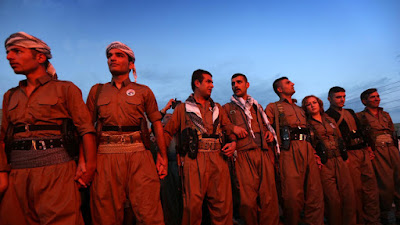
ANALYSIS: Revealing the brutal repression of Kurds in Iran
F. Mahmoudi, Special to Al Arabiya English Saturday, 9 September 2017 Acts of brutality against the Kurdish population in Iran is a ...
-
 What makes the new Iran sanctions significant? June 21, 2017 What makes the new Iran sanctions significant? ...
-
 Iran Focus London, 2 Jul - Experts and scholars, prior to participating in #FreeIran gathering, joined a panel discussion, held in P...
-
 Alireza jafarzadeh Iran Focus London, 22 Jun - The I...